Milan Fashion Week is, on paper, eight days of runway shows. In practice, it is the most concentrated mobility test of the European luxury calendar — five hundred guests of consequence converging on twelve venues, every transition timed to the minute, every absence noticed. We coordinate up to forty vehicles simultaneously. We do not coordinate spectacle; we coordinate that no client of ours ever waits.
The week the city changes hands
For one week each February and September, Milan reorganises itself around its showrooms. Streets close, palazzi reopen, the city's hotel inventory tightens to four-percent vacancy, and the social geometry collapses around four square kilometres between the Quadrilatero della Moda and Via Tortona. For our team, the week begins ninety days earlier — with showroom appointments confirmed, runway tickets cross-referenced, and the buyer's after-show calendar mapped against vehicle availability hour by hour.
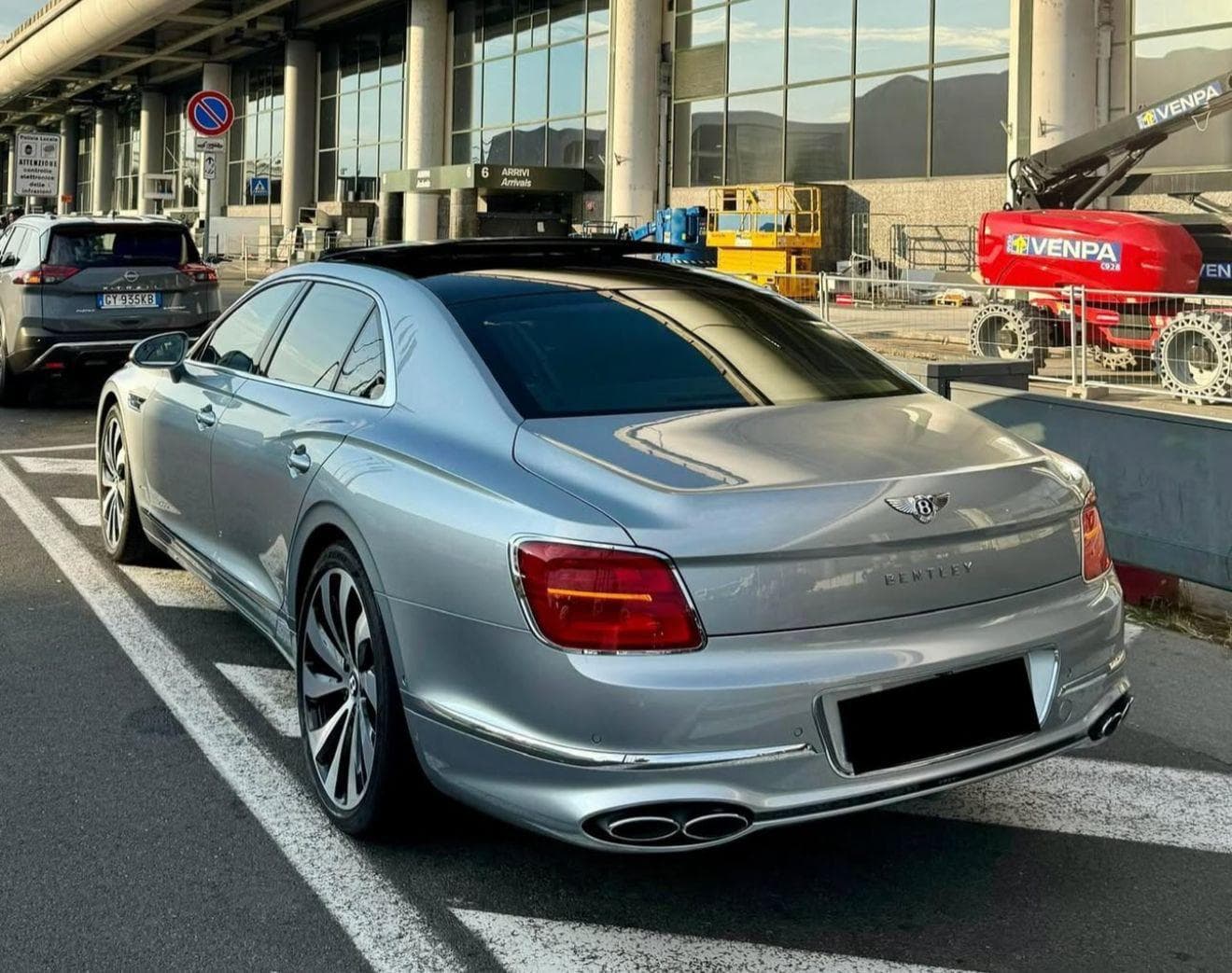
The orchestration is invisible to the guest, and that is the point. A Phantom waits at Via Solferino at 18:48 because the Prada show ends at 18:45 and the buyer's next appointment is across town at 19:30. There is no slack.
Dispatch as a literary form
A typical Fashion Week day for our clients includes eight to twelve mandatory appearances: morning fittings, lunch with a designer or brand director, two to four runway shows, an aperitif, a dinner, and an after-party. Each of these has a vehicle requirement that depends not only on the route but on what the guest will be wearing, who they are accompanied by, and whether the evening is on or off the record.
We operate, during these weeks, like a small newsroom. There is a master schedule pinned to the wall, four dispatchers working in shifts, and a single rule: no client is ever told they have to wait. If a runway runs late — and they always run late — we redirect. If a buyer's fitting overruns, we reposition. The choreography is real-time and the only acceptable error margin is zero.
What changes between Prada, Versace and Armani
It is not the same job to extract a guest from the Prada show as it is from Armani. Prada at Fondazione Prada means a controlled exit through Largo Isarco — wide kerb, two-minute window per car. Versace at Via Gesù means narrow streets, slow extraction, a need for nimble vehicles like the Mercedes V-Class for groups of four or more. Armani at the Teatro Armani has its own internal entrance for the brand's top fifty guests; we coordinate with the maison's protocol team directly.
We maintain a private brief for each major venue, refreshed every season. It contains the kerb diagram, the police escort timing, the after-show traffic pattern, the location of the press pen, and the exact words the door staff use to clear the path. The brief is not shared — it is what differentiates a maison from a broker.
The after-party paradox
After-parties do not appear in the official calendar. They appear in WhatsApp groups two hours before they happen and the address often changes once. We have two protocols: a "standby fleet" of three to five vehicles staged in central locations through the night, and a shadow dispatch line for clients who text us a venue and expect a vehicle to materialise within nine minutes.
This is where the operator-versus-broker distinction becomes financial. Brokers charge a 30–40 percent late-night premium because they are scrambling for sub-contracted vehicles. We do not, because the vehicles are already ours and already on the clock. The same client pays predictably what they would pay during the day.
No delays. No compromises.
The phrase appears on our home page; it is not marketing. It is the single performance metric we track during Fashion Week. In September 2025, across the eight-day cycle, we coordinated 384 individual transit segments for 23 client groups. Average delay: 0.0 minutes. The single late arrival was a guest who lost a heel and chose, charmingly, to walk the last block.
This is what the Maison Française promises in Italy: not that we can move you, but that the city becomes, for the duration of your stay, navigable on your terms.
Booking